My Role
UX Product Design
Sketch, Invision, Adobe Suite
4 UX Designers
4 Product Owners
2 Dev Teams
18 months
Duration
Team
Tools
Company
Epiq
Date
2017-2020
(Re) Design Sells
A redesign of several applications becomes a key selling feature at our industry's leading national tradeshow.
Epiq, the 2nd largest software company in the legal industry, offers several unique applications and solutions, most of which were acquired from other companies over many years.
Redesigning them wasn't a priority until I showed small wins. The redesigns became a strategic advantage andselling point.
Epiq grew through acquisition. They buy other companies. Of the dozen or so applications that make up the majority of their revenue, none look like any of the other applications. They look and feel exactly like when they were made – sort of a snapshot of software trends and practices, frozen in the time.
I was hired to be the UX person for DMX. There were three other UX designers, all in different cities. We were all heavily silo'd - working only on our assigned application. We barely talked.
The application I worked on was designed to "digest" billions of documents. When a large company declares bankruptcy, every hard drive, email, social media post, and cloud file needs to be catalogued so lawyers can sift through it.
That's what DMX does.
The Situation
Frankenstein's Application
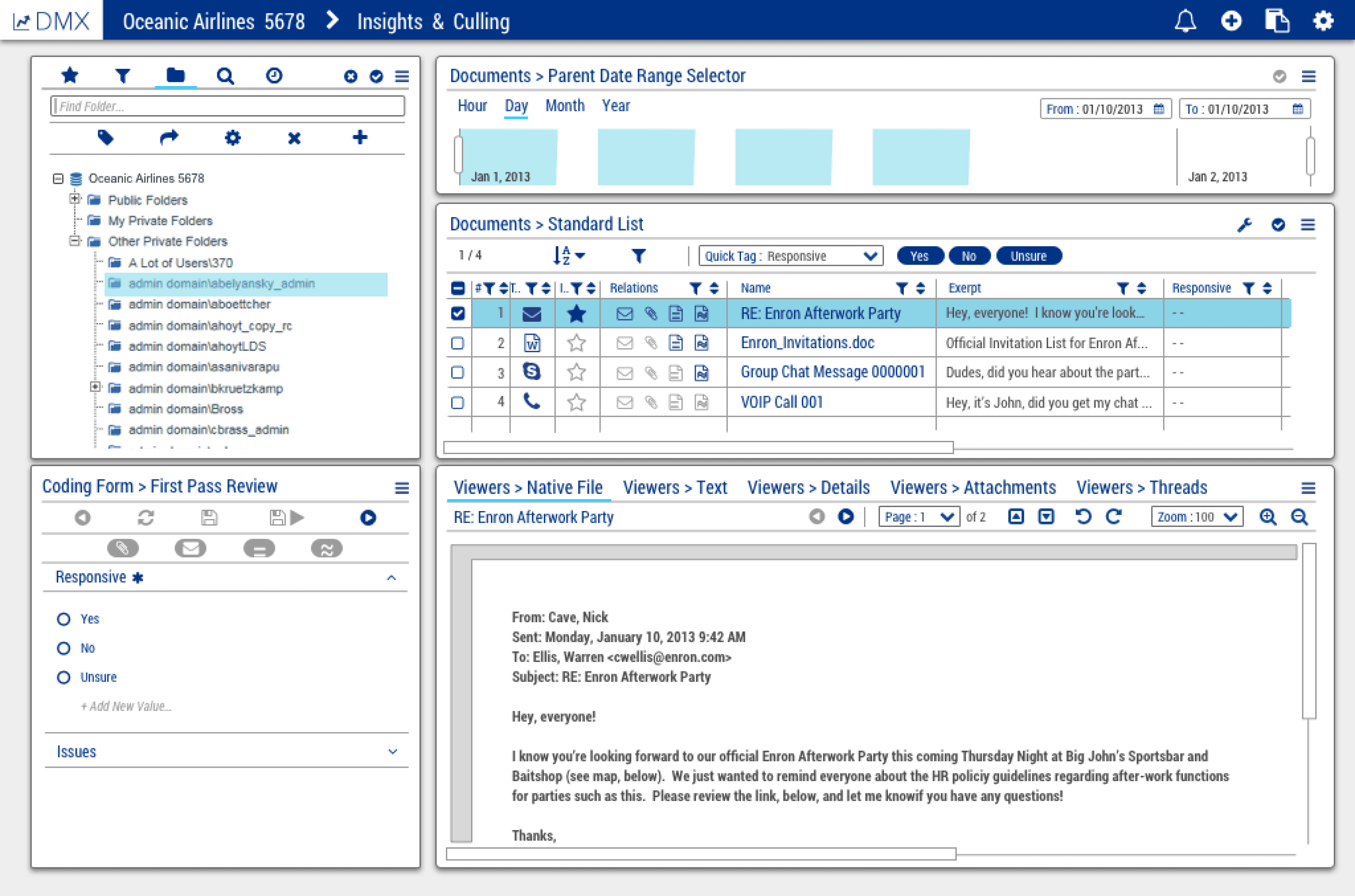
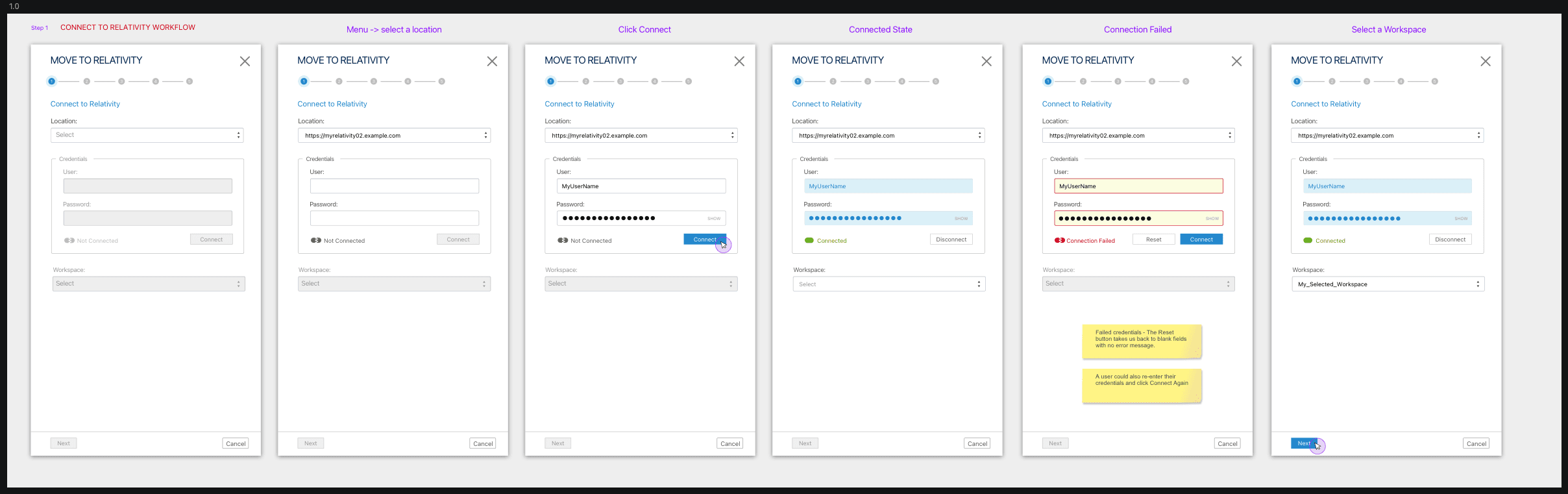
One of my first tasks was to figure out how to export DMX data into another application, called Relativity. There was no obvious way to do it using existing design patterns in DMX. The only way to accomplish our goals (and also add any future functionality) would be to "bolt on" some UI feature that would never quite match – like this side panel (below). We started calling them Frankenstein solutions.
I recognized that we needed to uplift everything before we reached a real crisis.
DMX as it looked in 2017, when I started. The visible dates are all 2013 because we use Enron bankruptcy data for in-house testing.
Getting the Team to Buy Into a Redesign
I began a re-design inventory process.
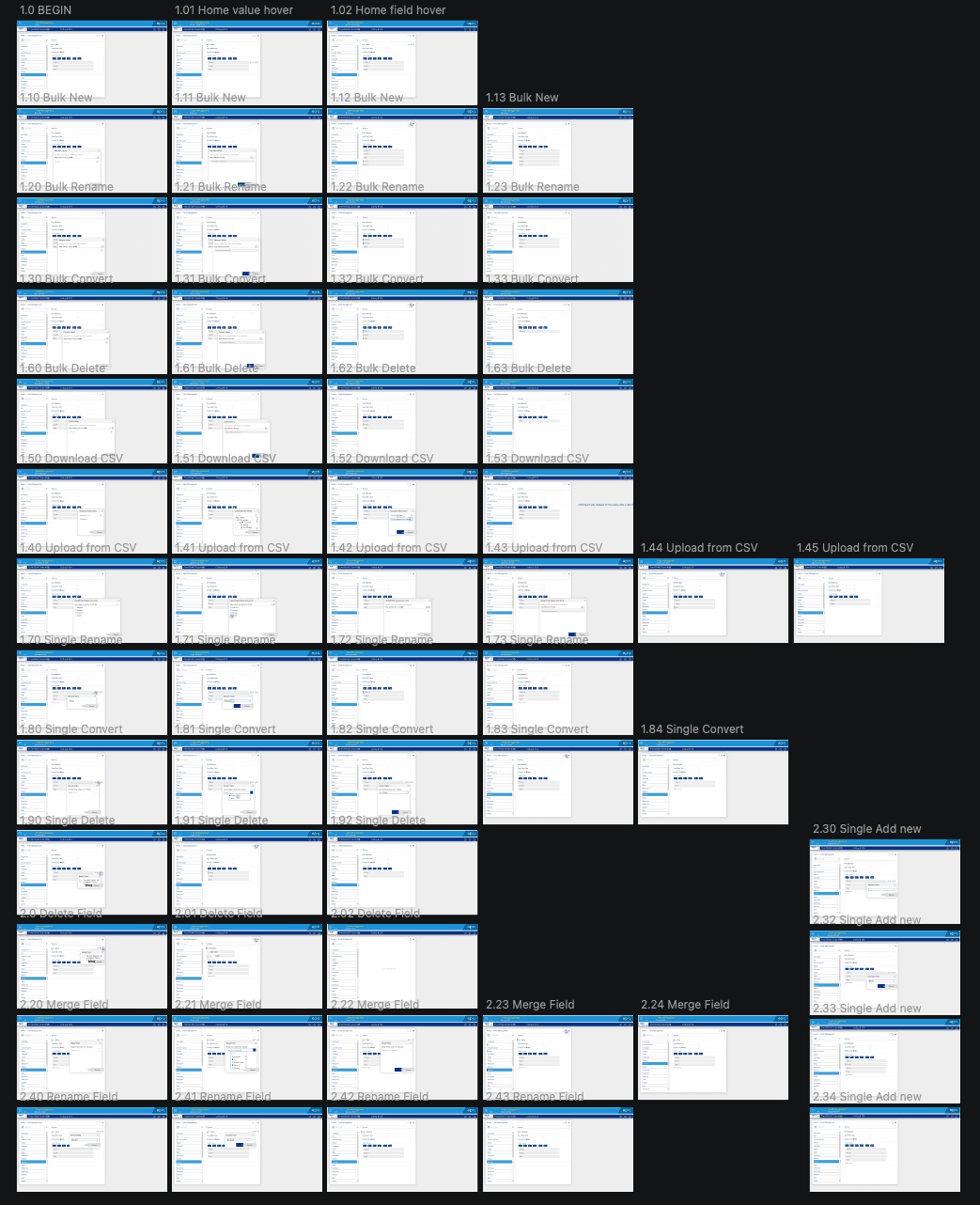
I first made an authoritative sitemap where I documented every feature, function, and user flow. I assign each of these a number - kind of like the dewey decimal system.
This numbering is so that when we redesign we can verify that it can accomplish the same things as old screens i.e. 2.20, 2.30, 2.31, 2.4x etc … are all accounted for.
Nothing should get lost.
DMX had more than 600 screens - it was unnecessarily complicated because of it's early 2000's card-based UI.
Component Inventory
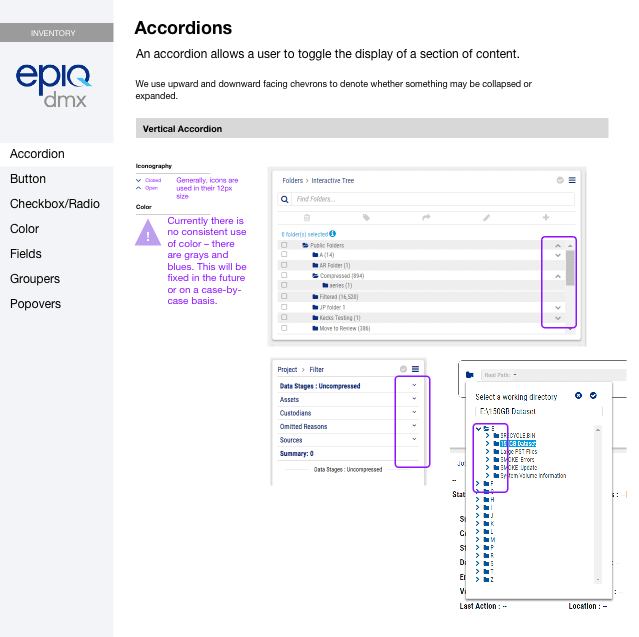
I inventoried and documented our Components – controls, menus, buttons, and other discrete UI elements.
Because the screens were numbered, I could document, for example, that a particular Accordion control existed in two places: 12.4 and 14.1.
I think we had more than 10 different Date Picker controls!
Low-Hanging Fruit
I knew that if I asked for a full re-design, even though we could see that we'd eventually hit a design crisis point, that it would be denied. When I had brought it up casually, I was told that it'd be "too time-consuming," "we don't have the resources" or "there's no business benefit right now."
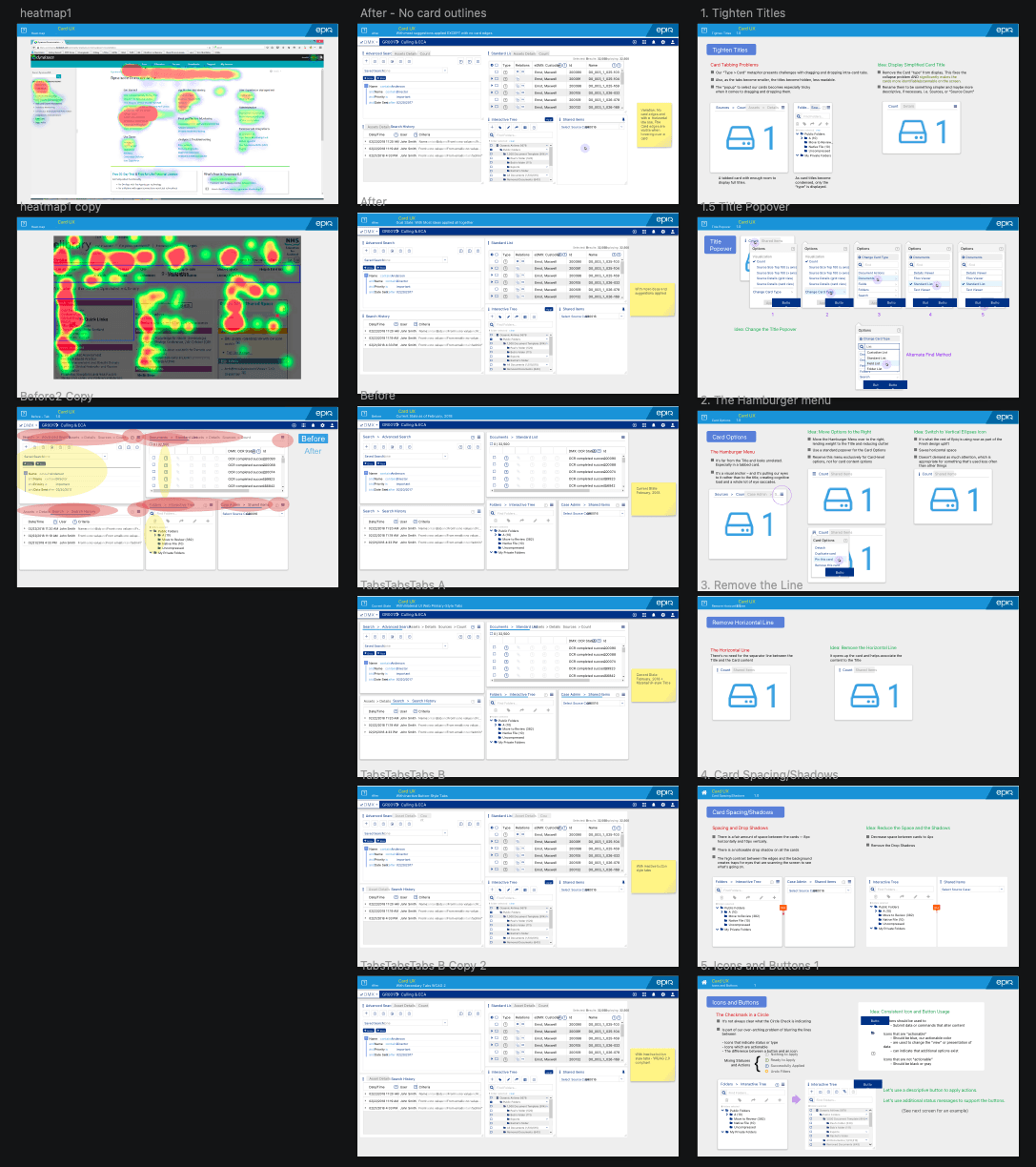
So I used my inventories and made a Top 6 UX Improvement Suggestions presentation. These were quick, easy-to-implement changes that would make the overall application noticeably better.
They agreed!
And they loved the results.
And so did the clients.
And so did the other Epiq teams.
And that started the discussion about doing a real redesign of DMX. Which we did!
They loved it.
We had a special UX design sprint where we addressed these issues, plus a few others that had bothered other stakeholders.
Clients loved it. So that's when the stakeholders had an idea – to do a redesign! I put together an estimate and we put it on the project roadmap.
DMX Redesign 2018
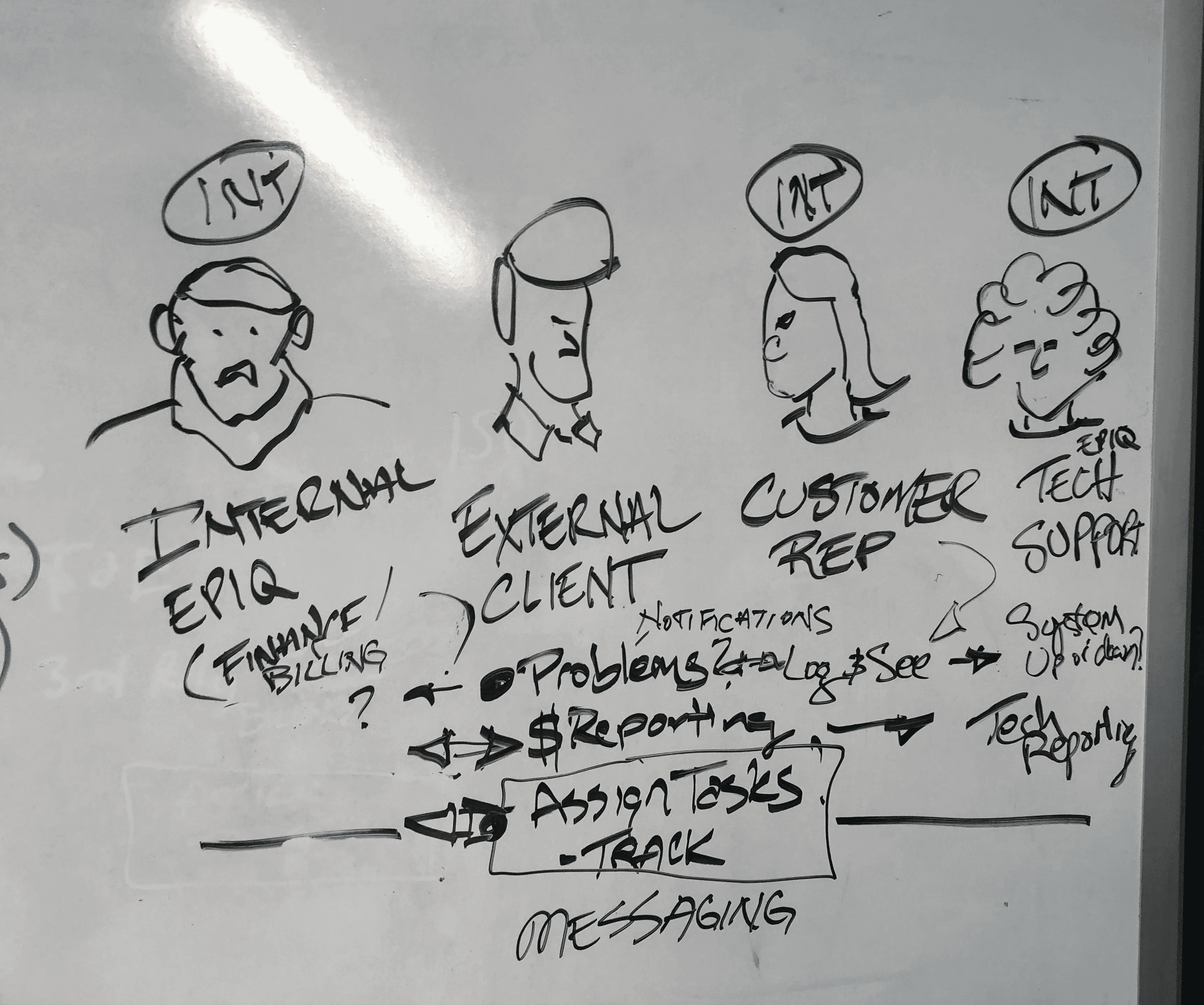
I ran a series of whiteboarding sessions with stakeholders where we diagrammed and wireframed potential solutions. One of the days I introduced the concept of Personas to the group. This genuinely helped us to solve what should be displayed on several of our dashboards - because not everyone needs to see the same thing.
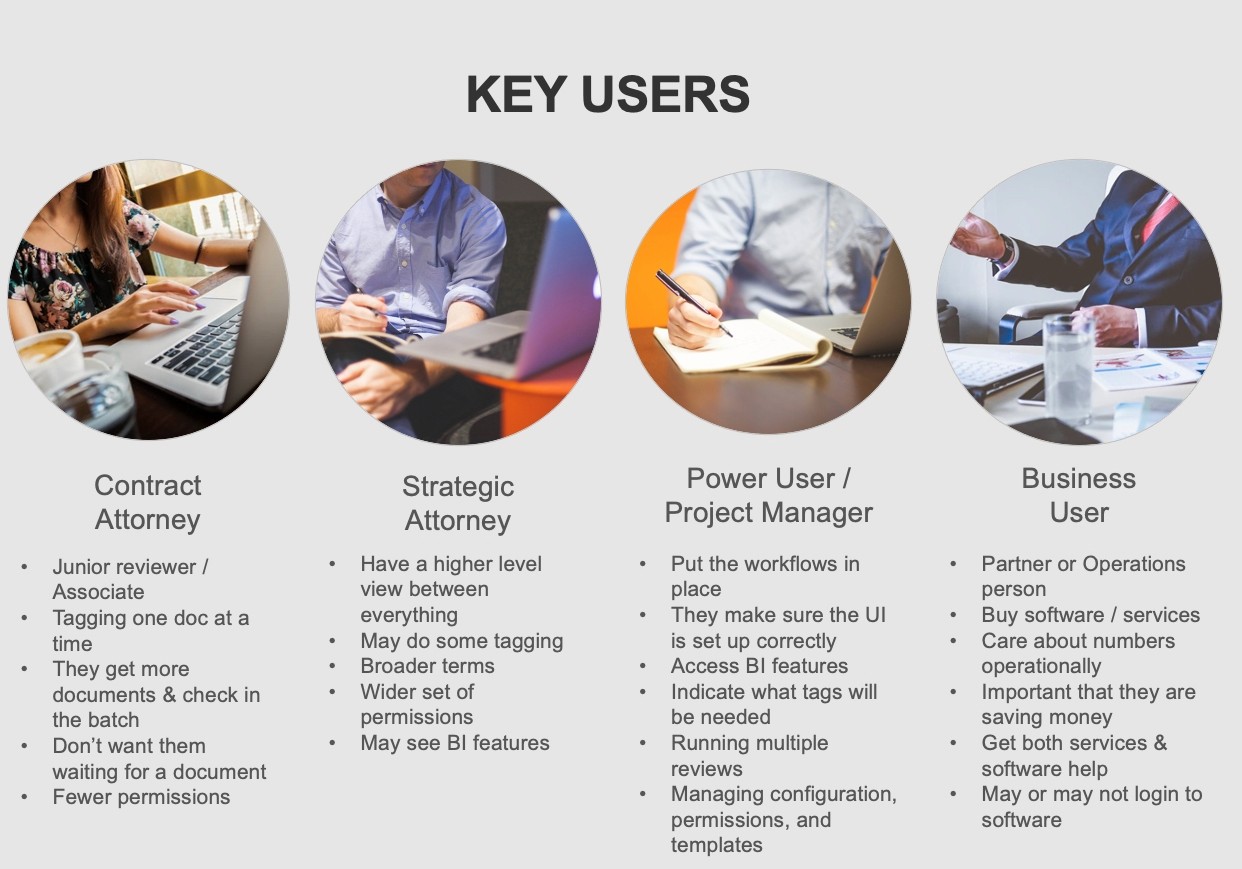
The initial whiteboard Persona exercise brought out a spirited discussion that helped shape what users need to see. It evolved and became what we called our "Key Users"
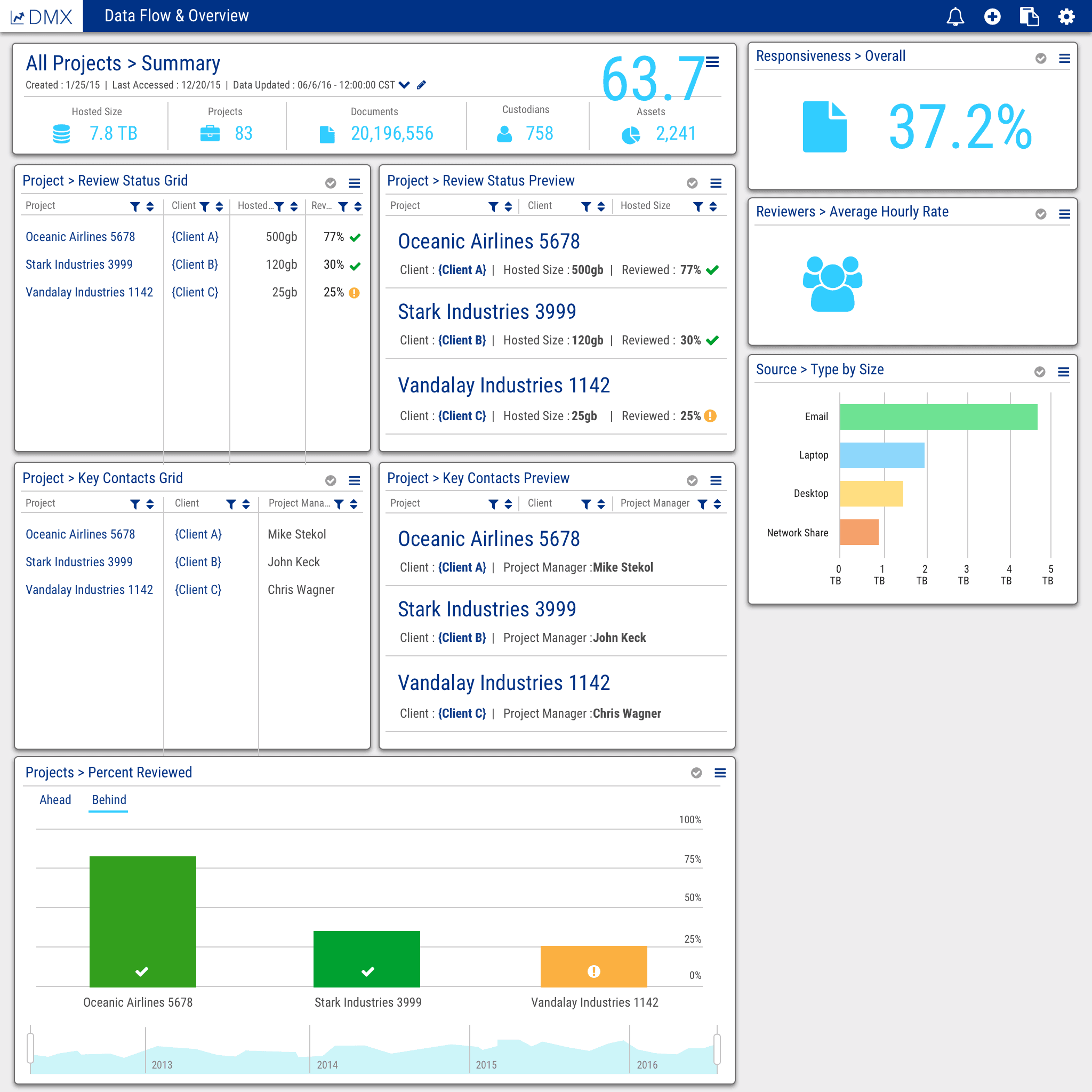
DMX Dashboard
BEFORE
DMX Dashboard
AFTER
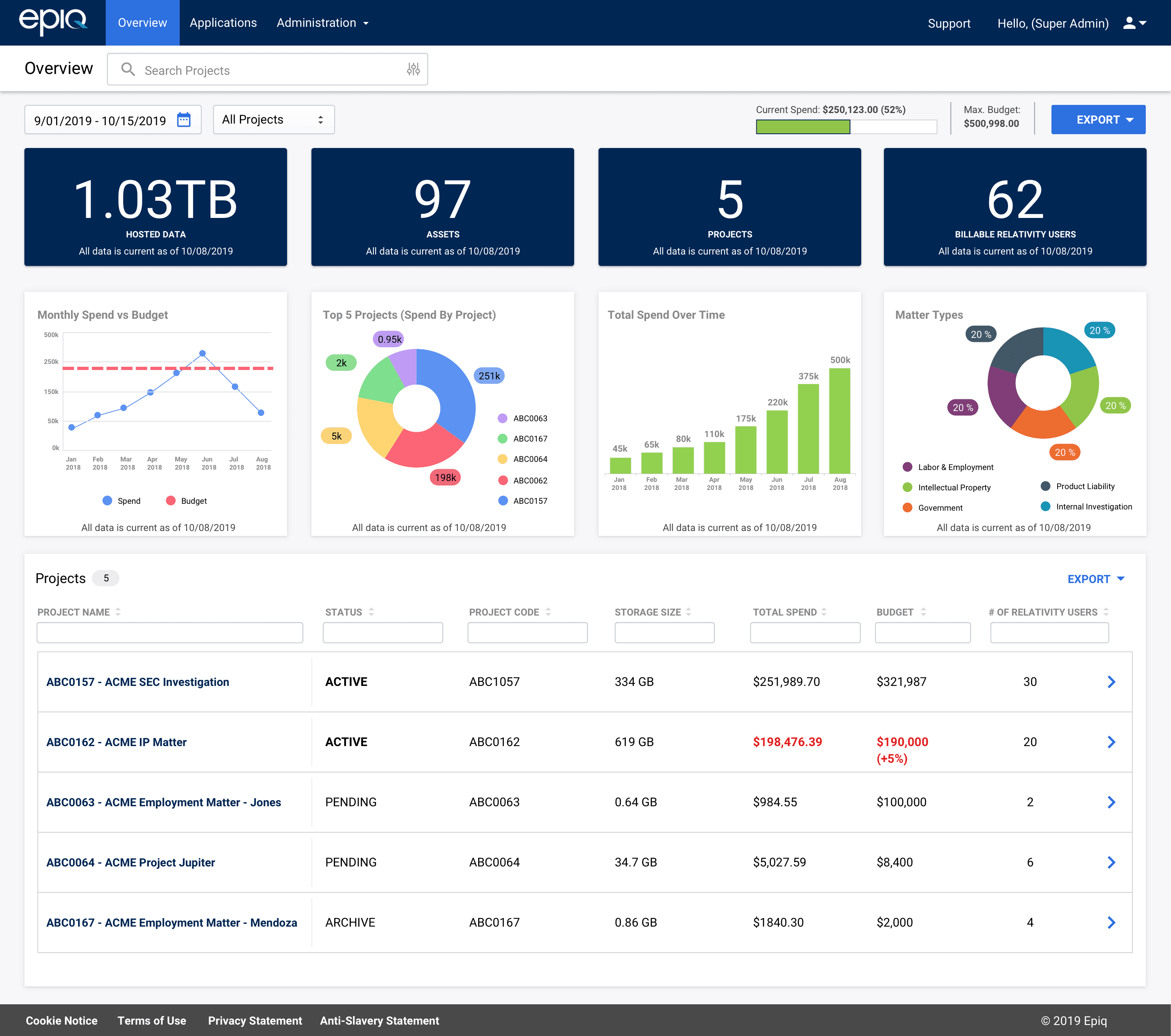
I talked to the Developers and we had a few technical session discussions about what frameworks or choices we could make that would be easiest or best to apply or mainstain. We settled on Material Design but with a few key differences to accommodate some special needs.
I mocked up key pages, like this dashboard, into Before and After visuals to show the Stakeholder group. They provided valuable feedback and so I went into the full redesign.
ALL Epiq Redesign 2019
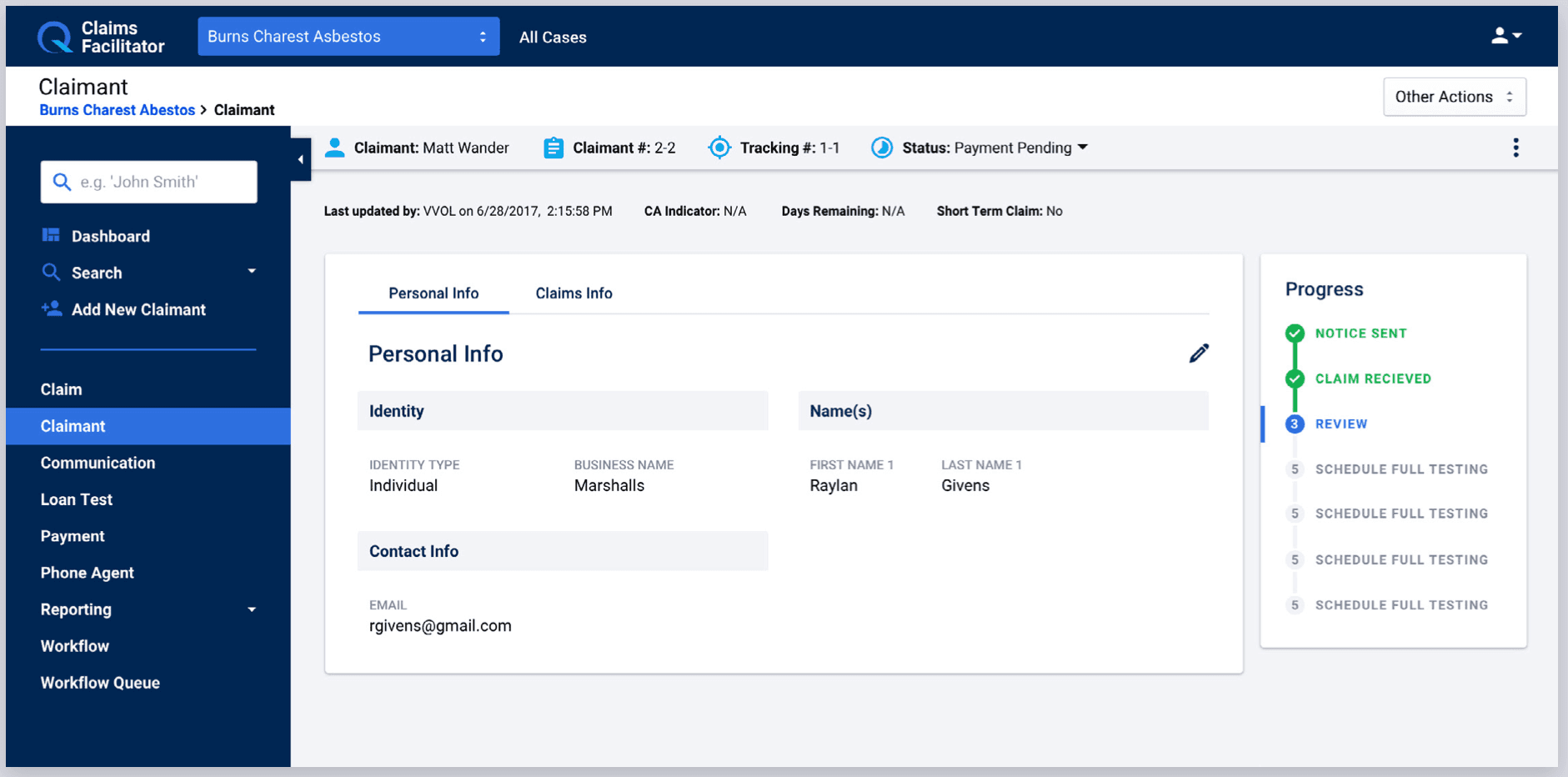
The DMX Redesign was polished and well-received. We got a new CEO in 2019 and he wanted ALL of our applications to have this same look and feel. This allowed me to work with our other previously-silo'd UX designers to go through the redesign process.
Together we built an Epiq Style Guide and proceeded to redesign and launch our highest-profile applications.
Claims Facilitator
AFTER
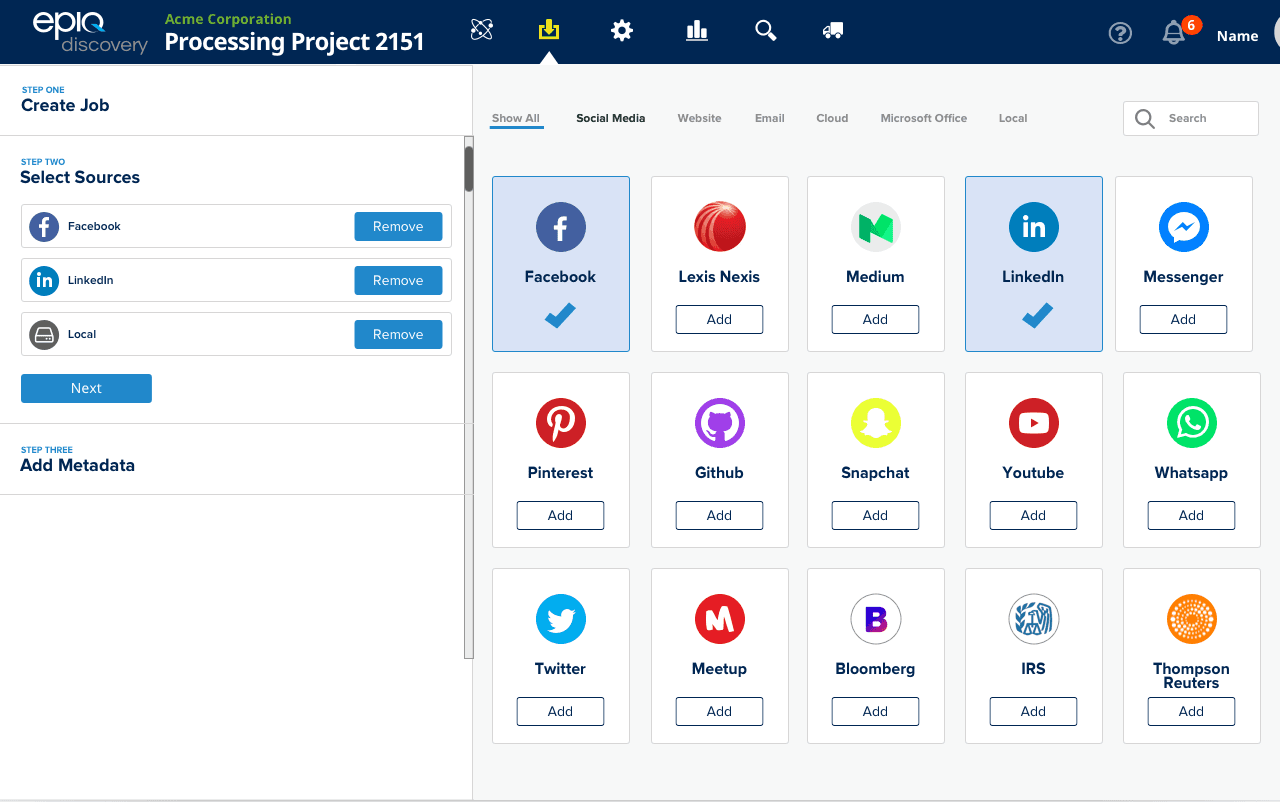
Epiq Discovery
AFTER
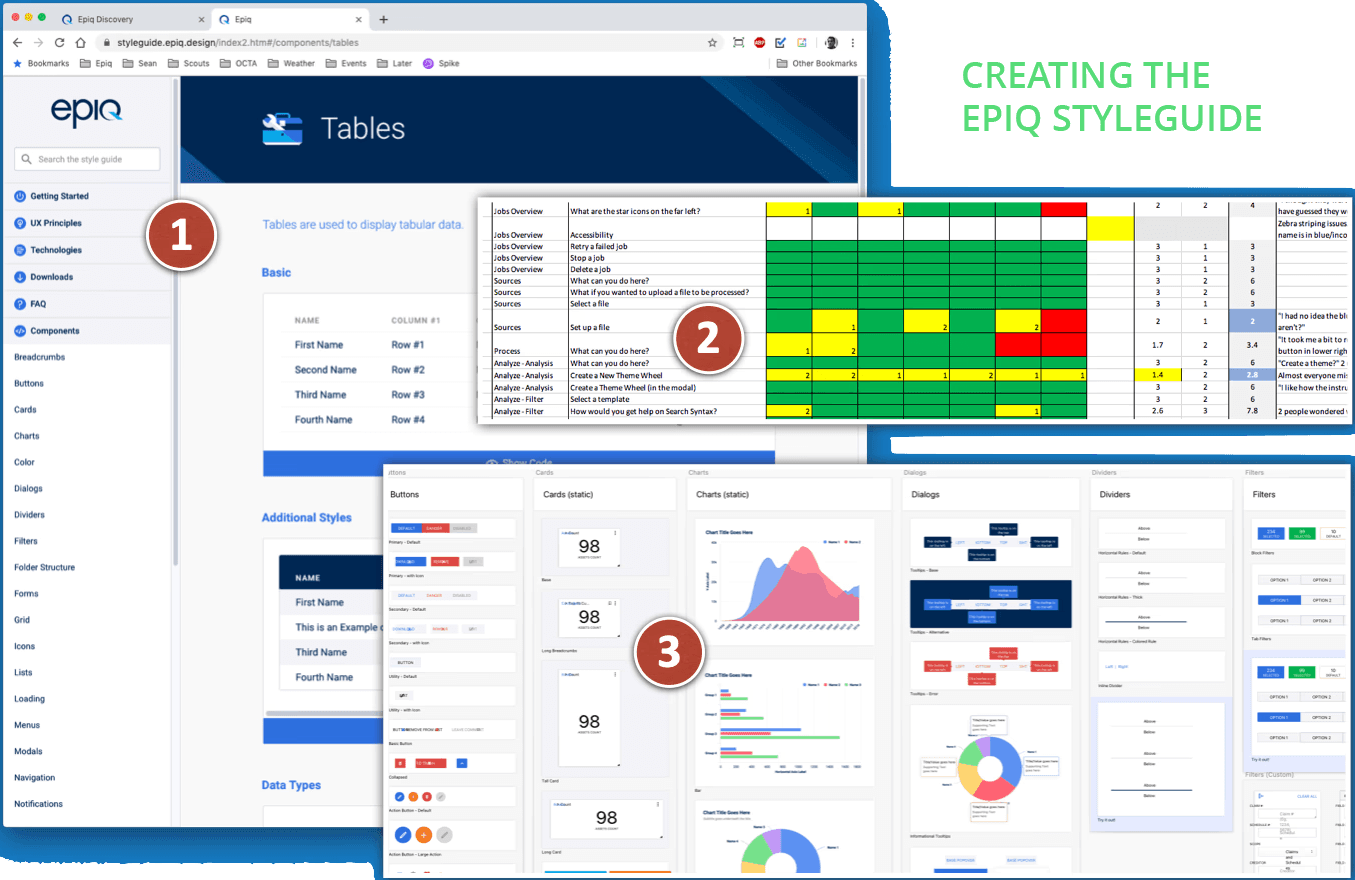
A standalone Style Guide website (this is pre-Figma)
A shared Roadmap document so that devs, UX, and stakeholders could see progress.
Our modified Material Design styles in Sketch / Invision
This redesign was different from others I had done, because it started out as small improvements.
Those small improvements generated measurable positive differences in time/task tests or in customer satisfaction. Those changes, in turn, drove the demand for more UX design improvements. Marketing and Sales stakeholders became involved – not in terms of designing per se, but in communicating their goals to us, which we were able to satisfy.
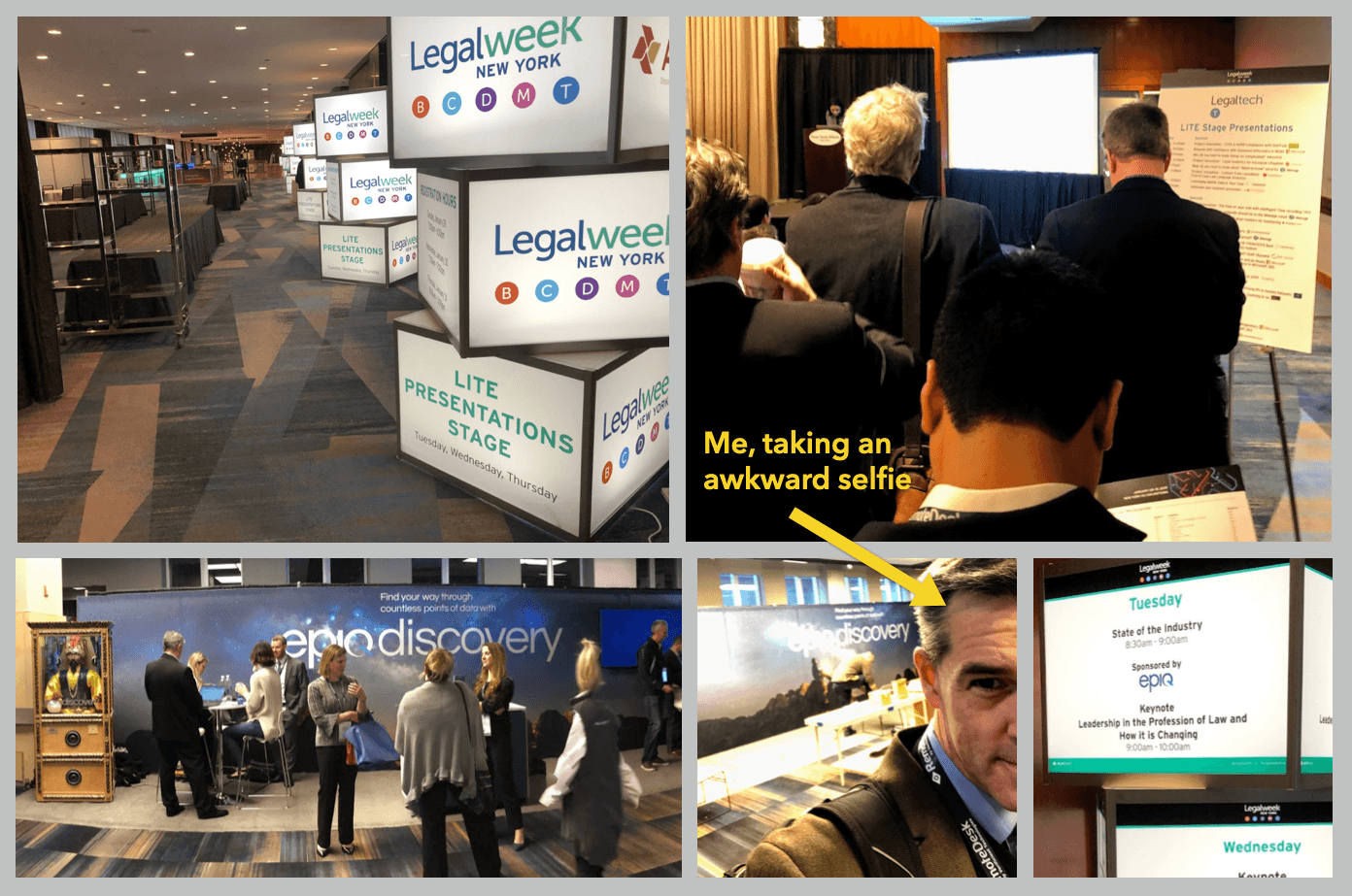
The redesign and usability enhancements I documented became a key selling point, which I helped present at the LegalWeek tradeshow - the biggest event in our industry.
Usability sells well to customers who value their time and ease of use!
The Rollout and Conclusion